Politics Explained: How Political Systems Shape Society and Government
Introduction
Have you ever wondered why some countries are peaceful and prosperous while others struggle with conflict, economic challenges, or social instability? Why do governments create certain laws? How are leaders chosen? And who decides how public money is spent?
The answer to all of these questions lies in one powerful concept: politics.
Many people hear the word politics and immediately think of elections, politicians, or political debates on television. While these are certainly important parts of politics, the subject goes much deeper than that. Politics influences almost every aspect of our daily lives, from the taxes we pay and the schools we attend to the healthcare services we receive and the rights we enjoy as citizens.
This is why understanding what is politics is so important. Politics is not just about governments or political parties—it is the system through which societies make decisions, distribute resources, create laws, and solve public problems. Whether at the local, national, or international level, political systems help shape the way communities and countries function.
In today’s interconnected world, political decisions can affect millions of people within seconds. A new law, economic policy, trade agreement, or government decision can influence jobs, education, business opportunities, public services, and even international relationships. As technology continues to transform society, politics is becoming more visible and influential than ever before.
In this guide, we’ll explore what is politics, its meaning, different political systems, the role of governments, political parties, elections, public policies, and how politics impacts society as a whole. Whether you’re a student, a curious reader, or someone looking to better understand how governments work, this article will provide a simple and easy-to-understand explanation of one of the most important forces shaping our world today.
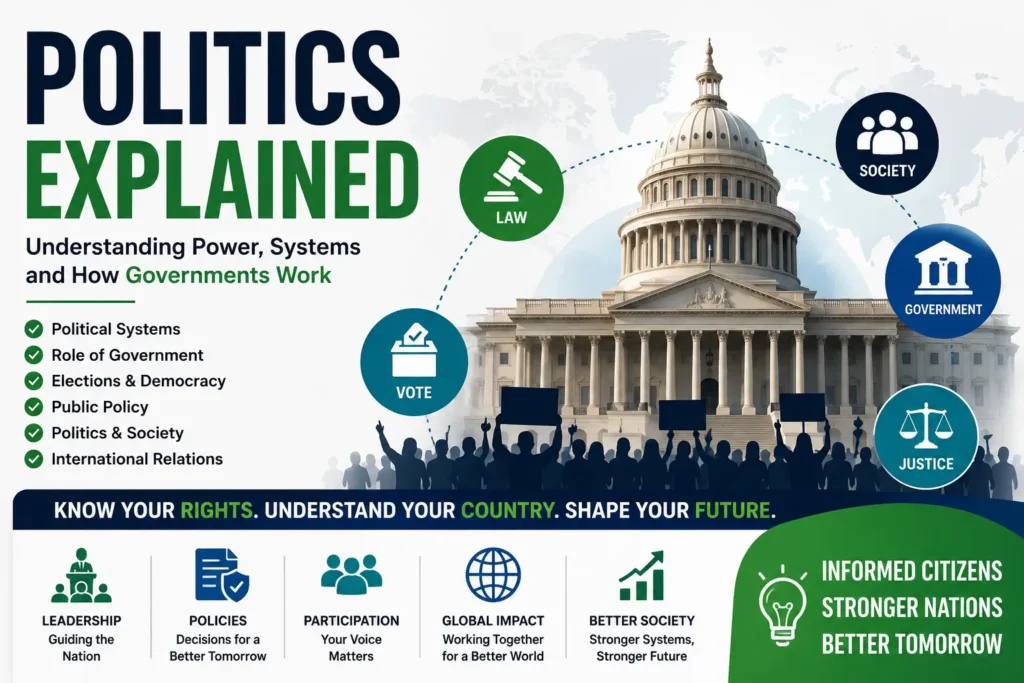
societies and governments. It affects laws, economy, public services, and international relations. Understanding politics helps people become informed citizens and participate effectively in society.
What Is Politics?
Politics is much more than elections, politicians, and government debates. At its core, politics is the process through which societies make collective decisions, distribute power, create laws, and manage public resources. Every organized society, whether large or small, relies on some form of political system to maintain order and guide development.
In simple terms, politics determines who has the authority to make decisions and how that authority is exercised. These decisions affect nearly every aspect of daily life, including education, healthcare, employment, taxation, public safety, infrastructure, and economic growth.
When people search for what is politics, they often want to understand how governments work and why political decisions have such a significant impact on society. The answer is simple: politics influences the rules, policies, and institutions that shape the lives of millions of people.
Key Elements of Politics
Politics is built around several important components:
- Decision-making and governance
- Leadership and public representation
- Law creation and enforcement
- Distribution of public resources
- Protection of citizens’ rights
- Management of social and economic issues
Without political systems, societies would struggle to coordinate services, resolve conflicts, and provide stability for their citizens.
Why Is Politics Important in Society?
Politics plays a vital role in maintaining social order and supporting national development. It provides the framework through which governments operate and public institutions function.
The relationship between politics and society is deeply connected because political decisions directly affect people’s opportunities, rights, and quality of life.
How Politics Impacts Everyday Life
Politics affects:
- The quality of education systems
- Healthcare services and access
- Employment opportunities
- Taxation and public spending
- Transportation and infrastructure
- Business regulations
- Public safety and security
Even individuals who are not interested in politics are affected by political decisions every day. From the cost of living to the availability of public services, politics influences countless aspects of modern life.
Types of Political Systems
Countries around the world use different political systems based on their history, culture, traditions, and constitutional structures. Understanding these systems is essential for learning how governments work and how political power is organized.
Democracy
Democracy is one of the most widely used political systems in the world. In a democratic system, citizens have the right to choose their leaders through free and fair elections.
Key characteristics include:
- Public participation in elections
- Protection of individual rights
- Accountability of leaders
- Rule of law
- Freedom of expression
Democracy is based on the principle that political power ultimately belongs to the people.
Monarchy
A monarchy is a system where a king, queen, or royal family serves as the head of state.
There are two main types:
- Constitutional Monarchy
- Absolute Monarchy
In constitutional monarchies, elected governments usually handle day-to-day political decisions while the monarch serves a symbolic role.
Republic
A republic is a political system where citizens elect representatives to govern on their behalf. Leaders serve for fixed terms and operate within constitutional limits.
Common features include:
- Elected leadership
- Written constitution
- Separation of powers
- Legal accountability
Many modern nations operate as democratic republics.
Other Political Systems
Some countries use mixed political models that combine elements from different systems. Political structures often evolve based on historical experiences, cultural values, and social needs.
The Role of Government in Politics
Governments are responsible for implementing political decisions and managing public affairs. They serve as the primary institutions through which political systems operate.
Understanding the role of government helps explain how political decisions are transformed into laws, policies, and public services.
Main Functions of Government
Governments are typically responsible for:
- Creating and enforcing laws
- Protecting national security
- Managing economic policies
- Providing public services
- Maintaining infrastructure
- Conducting international relations
Effective governments help create stability, encourage economic growth, and improve citizens’ quality of life.
Political Parties and Their Role
Political parties are organizations that bring together people who share similar political beliefs and policy goals. They play a crucial role in democratic systems by offering voters different approaches to governance.
Why Political Parties Matter
Political parties:
- Participate in elections
- Develop public policies
- Represent citizens’ interests
- Hold governments accountable
- Provide political leadership
Through political parties, citizens can choose leaders and policies that best reflect their values and priorities.
Elections and the Political Process
Elections are one of the most important features of democratic governance. They allow citizens to participate directly in choosing political leaders and influencing public policy.
How Elections Work
The election process generally involves:
- Candidates presenting their ideas and policies.
- Citizens casting their votes.
- Votes being counted transparently.
- Winners forming governments or taking office.
Why Elections Are Important
Elections help:
- Strengthen democracy
- Promote accountability
- Encourage citizen participation
- Support peaceful transfers of power
A fair electoral system increases public trust in government institutions and political leadership.
Public Policy and Government Decision-Making
Public policy refers to actions and decisions taken by governments to address public issues and achieve national goals.
Examples include:
- Education reform
- Healthcare programs
- Environmental protection
- Economic development strategies
- Taxation policies
Good public policy aims to improve living standards, solve social problems, and promote sustainable development.
International Relations and Global Politics
Modern politics extends beyond national borders. Countries constantly interact through diplomacy, trade, security agreements, and international organizations.
Key Areas of International Politics
- Trade partnerships
- Diplomatic relations
- Global security cooperation
- Climate agreements
- Economic alliances
Strong international relations help countries address shared challenges and promote global stability.
Political Awareness and Active Citizenship
Political awareness means understanding how political systems, governments, and public institutions operate.
Benefits of political awareness include:
- Better understanding of rights and responsibilities
- More informed voting decisions
- Increased civic participation
- Greater accountability from leaders
An informed population plays an essential role in maintaining healthy democratic societies.
Politics and the Economy: Why They Are Closely Connected
Politics and the economy are deeply linked. Government decisions influence everything from job opportunities and business growth to taxes and the cost of living. In many ways, economic success depends on the effectiveness of a country’s political system.
For example, governments create tax policies, regulate industries, invest in infrastructure, and establish trade agreements with other nations. These decisions can either encourage economic growth or create challenges for businesses and citizens.
Some of the most important ways politics affects the economy include:
- Tax laws and government spending
- Employment and labor regulations
- Trade and international business policies
- Inflation and economic stability
- Investment and business confidence
This is one reason why understanding politics and society is so important. Political decisions often have long-term effects on people’s financial well-being and quality of life.
Common Challenges in Politics
No political system is perfect. Governments around the world face a variety of challenges that can impact their ability to serve citizens effectively.
Some common political challenges include:
Corruption
Corruption occurs when individuals misuse political power for personal gain. It can reduce public trust and weaken government institutions.
Political Polarization
Strong disagreements between political groups can make it difficult to find solutions to important national issues.
Economic Inequality
Governments often face the challenge of balancing economic growth with fair opportunities for all citizens.
Political Instability
Frequent leadership changes, conflicts, or weak institutions can create uncertainty and slow national development.
Misinformation
In the digital age, false information can spread quickly and influence public opinion, making political awareness more important than ever.
Addressing these challenges requires transparency, accountability, strong institutions, and active citizen participation.
The Future of Politics
Politics continues to evolve alongside technology, globalization, and changing social expectations. As societies become more connected, governments are adopting new ways to communicate with citizens and deliver public services.
Several trends are expected to shape the future of politics:
Digital Governance
Governments are increasingly using technology to improve efficiency, transparency, and public services.
Online Political Participation
Citizens now have more opportunities to engage with political issues through digital platforms and online discussions.
Artificial Intelligence in Government
AI technologies may help governments analyze data, improve decision-making, and deliver services more effectively.
Greater Global Cooperation
Many modern challenges, including climate change, public health, and cybersecurity, require countries to work together across borders.
As these trends continue, understanding how governments work and how political systems adapt will become even more important.
Why Political Awareness Matters
Political awareness is not just for politicians, journalists, or academics. Every citizen benefits from understanding how politics works.
When people understand what is politics, they can:
- Make informed voting decisions
- Better understand their rights and responsibilities
- Hold leaders accountable
- Participate in public discussions
- Support positive social change
An informed population helps create stronger institutions, healthier democracies, and more effective governments.
Frequently Asked Questions (FAQs)
What is politics in simple words?
Politics is the process through which societies make decisions, create laws, distribute resources, and choose leaders who govern on behalf of the public.
Why is politics important?
Politics helps organize society, manage governments, create laws, provide public services, and address national and global challenges.
What are political systems?
Political systems are the structures and processes used to govern a country. Examples include democracy, monarchy, and republic systems.
How do governments work?
Governments create and enforce laws, manage public resources, provide services, protect citizens, and represent the country internationally.
What is the role of political parties?
Political parties represent different ideas and policies, participate in elections, and help citizens choose political leaders.
How does politics affect everyday life?
Politics influences education, healthcare, employment, taxes, public services, infrastructure, and many other aspects of daily life.
What is international politics?
International politics refers to relationships between countries, including diplomacy, trade, security cooperation, and global agreements.
Why should citizens understand politics?
Political awareness helps citizens make informed decisions, protect their rights, and actively participate in shaping society.
Conclusion
Politics is far more than elections and political debates. It is the foundation of how societies are organized, how governments function, and how important decisions are made. From creating laws and managing economies to protecting citizens and maintaining international relationships, politics influences nearly every aspect of modern life.
Understanding what is politics, learning about different political systems, and exploring how governments work can help people become more informed and responsible citizens. Whether at the local, national, or global level, politics plays a crucial role in shaping opportunities, rights, public services, and the future of society.
As the world continues to change through technology, globalization, and new forms of governance, political awareness will become even more valuable. By staying informed and engaged, individuals can better understand the decisions that affect their lives and contribute positively to their communities and society as a whole.