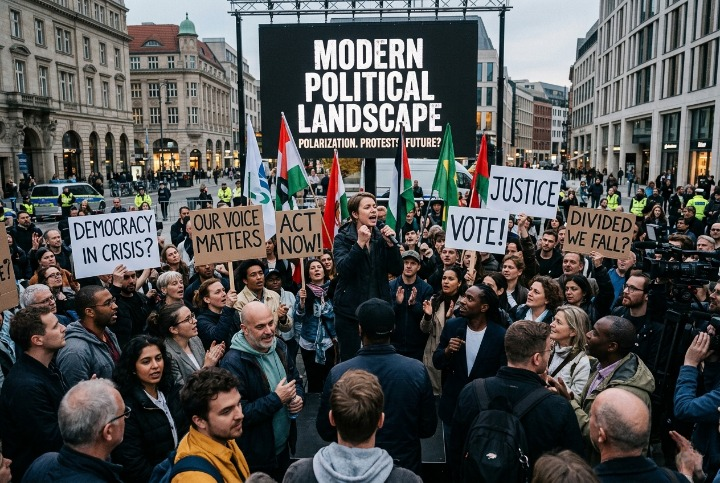
Why Modern Politics is Changing: The Ultimate Guide to the New Era
Introduction:
Politics isn’t just about what happens in marble buildings anymore. It is in our pockets, on our screens, and at our dinner tables. The world is witnessing a transformation in how we govern ourselves, driven by technology and shifting social values.
Understanding the modern political landscape requires looking beyond the headlines. It requires a deep dive into the “why” behind the “what.” Why are people more divided? How does a single tweet change a national election? In this guide, we break down the complexities of 21st-century politics into clear, actionable insights.
2. Defining the Modern Political Landscape
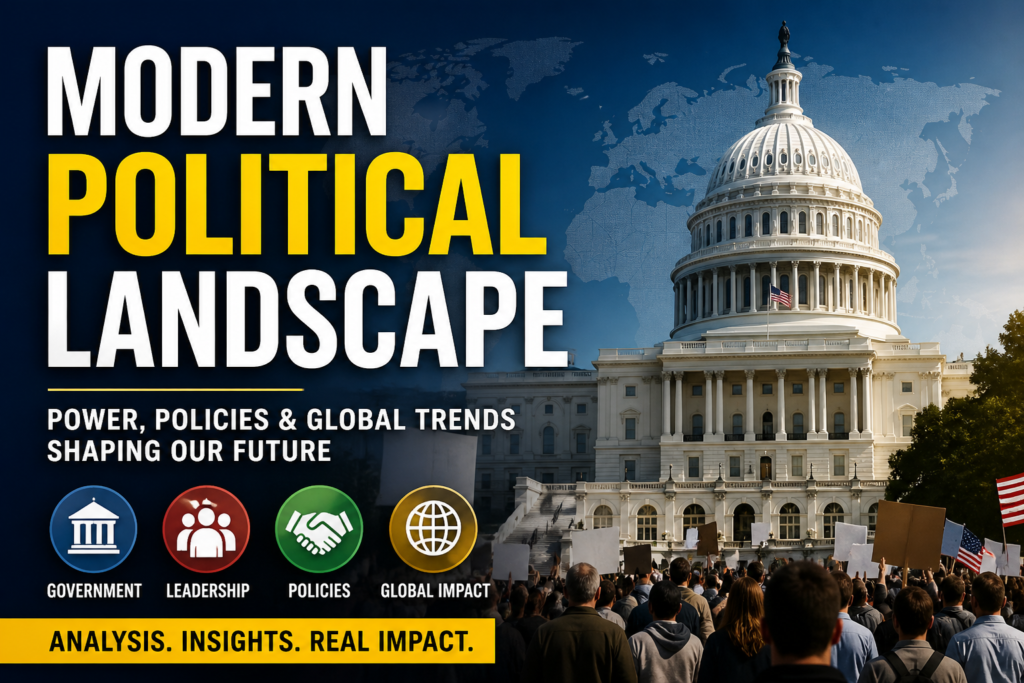
To understand where we are going, we must define where we are. The “Modern Political Landscape” refers to the current state of global and local governance characterized by high-speed communication, ideological shifts, and the rise of non-traditional political actors.
The Rise of Individual Influence
In the past, political power was held by a few gatekeepers—party leaders and media moguls. Today, a single citizen with a smartphone can spark a global movement. This decentralization of power is one of the most significant changes in human history.
The Death of the “Center”
We often hear about “moderate” voters, but data shows that the political center is shrinking. People are moving toward the edges of the ideological spectrum. This isn’t just a trend; it’s a fundamental shift in how people identify with their communities and their countries.
3. The Psychology of Political Polarization
Why can’t we just get along? The answer lies in human biology and psychology. Our brains are wired for “tribalism”—the need to belong to a group and defend it against outsiders.
The Echo Chamber Effect
Algorithms are designed to show us what we like. If you click on a video supporting one viewpoint, the “system” gives you ten more just like it. Over time, you stop seeing the other side entirely. This creates an echo chamber where your existing beliefs are constantly reinforced, making any opposing view seem not just wrong, but dangerous.
Affective Polarization
Political scientists now talk about “affective polarization.” This isn’t just a disagreement over taxes or healthcare; it’s a personal dislike for people on the “other side.” When politics becomes part of your identity, a critique of a policy feels like a personal attack.
4. The Role of Technology and Social Media
Social media has become the primary battlefield for modern politics. It has democratized information, but it has also weaponized it.
Rapid-Fire Information
In the 1980s, a political scandal might take days to break. Today, it happens in seconds. This “real-time” politics leaves little room for nuance or deep thought. We react to the headline before we read the article.
The Rise of Misinformation
Because anyone can publish anything, the barrier to entry for spreading “fake news” is zero. AI-generated images and deepfakes are making it even harder for the average voter to distinguish truth from fiction.
5. Economic Drivers of Political Change
Politics and the economy are two sides of the same coin. When people feel financially insecure, they look for drastic changes in leadership.
Wealth Inequality and Populism
The gap between the ultra-wealthy and the working class has fueled the rise of “populism” globally. Populist leaders promise to fight for the “forgotten man” against a corrupt “elite.” This message resonates when people feel the traditional system has failed them.
Globalization vs. Nationalism
For decades, the world moved toward global integration. Now, we see a “snap-back” toward nationalism. Many people feel that globalization helped big corporations but hurt local communities and destroyed traditional cultures.
6. Understanding Modern Voter Behavior
What makes someone go to the polls? It’s rarely just one issue.
The Power of Fear and Hope
Negative campaigning works because fear is a more powerful motivator than hope. If a voter believes the other candidate will “destroy the country,” they are more likely to show up. However, the most successful movements combine this fear with a vision of a better future.
Demographic Shifts
The “graying” of the West and the “youth bulge” in the Global South are changing political priorities. Younger generations focus more on climate change, social justice, and the “gig economy,” while older voters prioritize stability, healthcare, and traditional values.
7. Globalism and its Discontents
The dream of a borderless world is facing its toughest test. From trade wars to immigration debates, the tension between global cooperation and national sovereignty is the defining conflict of our age.
The European Experiment
The European Union remains the world’s most ambitious attempt at post-national governance, yet it faces constant internal pressure from member states wanting more autonomy.
The Shift Toward Multipolarity
The era of a single “superpower” is ending. We are moving into a multipolar world where the US, China, the EU, and regional powers like India and Brazil all vie for influence.
8. The Impact of Climate Change on Governance
Climate change is no longer a “future” problem. It is a present political reality that influences everything from migration patterns to energy policy.
The Green Transition
Governments are caught between the need to lower emissions and the need to keep energy costs low for their citizens. This “Green Dilemma” is a major source of political friction in developed nations.
Climate Migration
As parts of the world become uninhabitable, millions of people will move. This will place unprecedented pressure on the political systems of receiving countries, potentially fueling further nationalism.
9. Grassroots Movements and Civic Engagement
While national politics often feels stuck, local and grassroots movements are thriving.
The Success of “Bottom-Up” Politics
From local school board elections to city council meetings, people are realizing that they have the most impact close to home. Small groups can influence big changes when they are organized and focused.
Digital Activism
Hashtags don’t vote, but they do change the conversation. Movements like #BlackLivesMatter or the “Freedom Convoy” show how digital trends can manifest into physical protests that force governments to respond.
10. The Future of Democracy
Is democracy in retreat? Some experts suggest we are in a “democratic backsliding” phase. However, others argue that we are simply in a period of evolution.
Participatory Budgeting
Some cities are experimenting with letting citizens directly decide how to spend tax money. This “direct democracy” could be a way to rebuild trust in government.
AI and Governance
In the future, AI might help governments manage complex logistics more efficiently, from traffic flow to healthcare distribution. The risk, of course, is a “technocracy” where people feel they have no say in the algorithms that run their lives.
11. How to Be an Informed Citizen
In a world of noise, how do you find the truth?
- Check the Source: Is the website reputable? Do they have a clear bias?
- Cross-Reference: Don’t get your news from just one place. Read perspectives from different sides of the aisle.
- Wait Before You Share: If a story makes you feel intense anger, it’s likely designed to do so. Take five minutes to breathe before hitting “repost.”
- Look for Data, Not Just Anecdotes: One story about one person isn’t a trend. Look for broader statistics to see the full picture.
12. Conclusion: Shaping the Path Forward
Politics is the way we negotiate our shared future. It is messy, loud, and often frustrating. But it is also the only tool we have for collective action. The modern political landscape is changing, but the core need for honest leadership, civic participation, and mutual respect remains the same.
By understanding the forces of technology, psychology, and economics, we can move past the polarization and start building a political system that works for everyone.
FAQs
Q1: Why is political polarization increasing so much?
A: It is a combination of social media echo chambers, the decline of local community institutions, and a “winner-take-all” political culture that treats the opposition as an enemy rather than a competitor.
Q2: Does my single vote actually matter in modern politics?
A: Yes, especially in local and state elections where margins can be razor-thin. Furthermore, voting is just one part of “civic engagement”—participating in your community is what creates long-term change.
Q3: How can I talk to family members with different political views?
A: Focus on shared values rather than specific policies. Listen more than you speak, and avoid using “labels” or “buzzwords” that trigger defensive reactions.
Q4: Is social media destroying democracy?
A: Social media is a tool. It can be used to organize for good or to spread hate. The challenge is creating regulations and personal habits that prioritize truth over engagement.
Q5: What is “Populism,” and why is it so popular right now?
A: Populism is a political style that pits “the people” against “the elite.” It gains traction when large groups of people feel the existing system is no longer listening to them or serving their economic interests.