Synthetic Celebrities and AI Influencers: The Future of Digital Fandom in 2026
Introduction
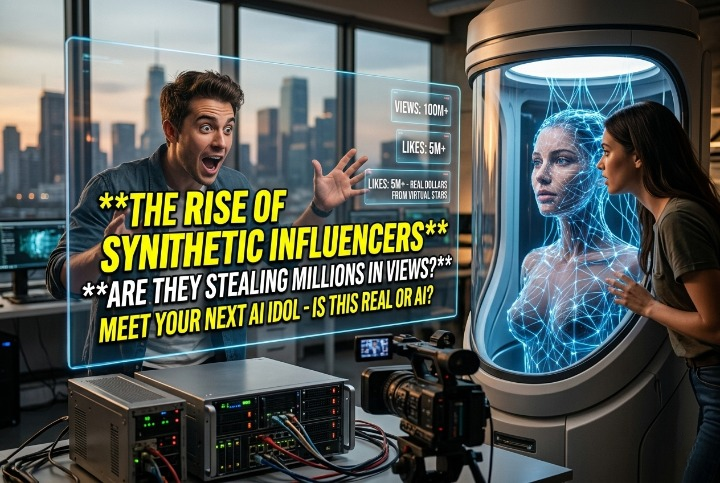
The line between the “real” and the “rendered” has officially disappeared. In 2026, you might find yourself scrolling through Instagram, captivated by a fashion icon with perfect skin and an impeccable sense of style, only to realize they don’t actually exist in the physical world. Welcome to the era of Synthetic Celebrities and AI Influencers. These digital-native personalities are no longer just tech experiments; they are multi-million dollar assets reshaping how we think about fame, trust, and the very nature of human connection.
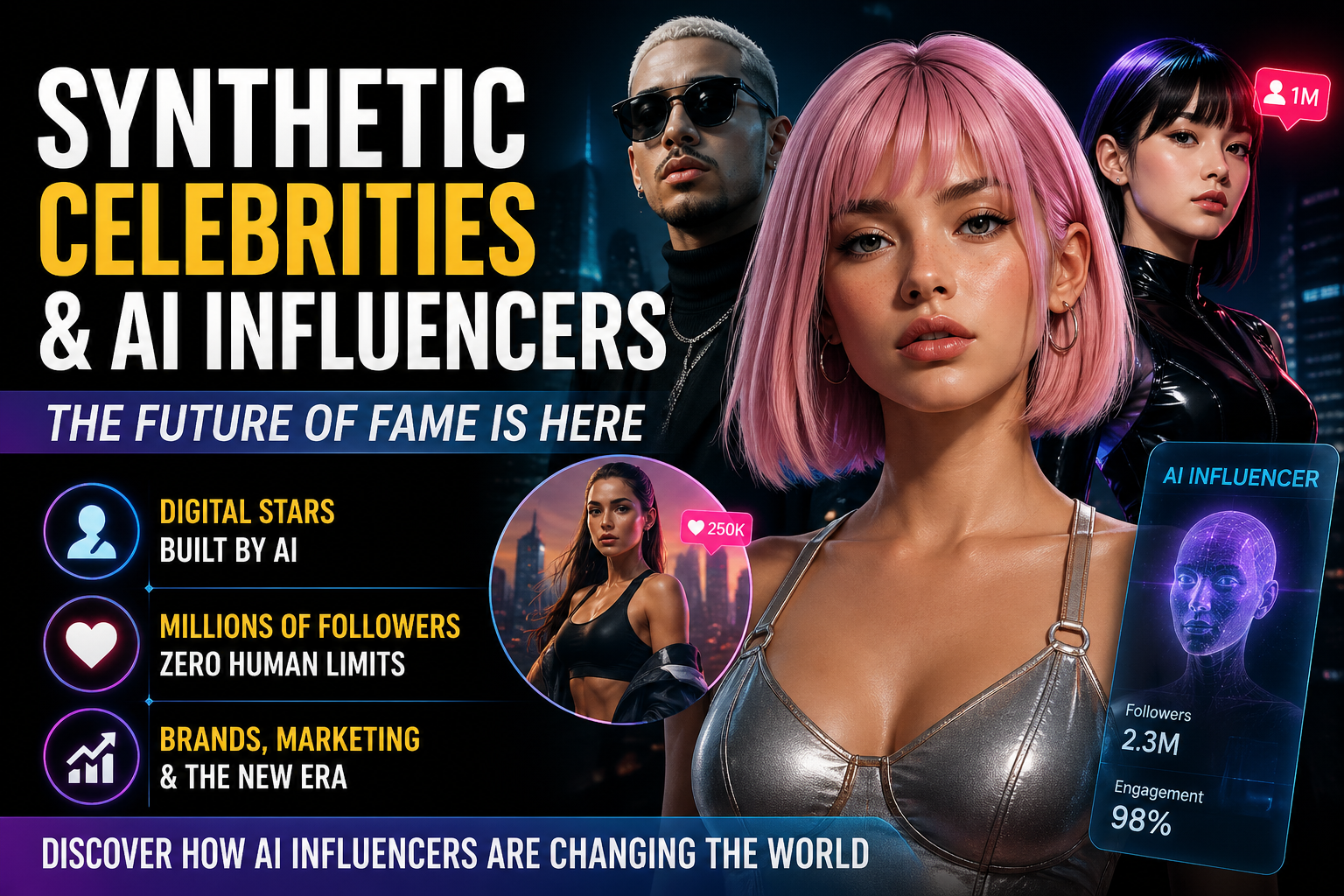
What started as a novelty—CGI characters like Lil Miquela—has evolved into a sophisticated ecosystem of AI-powered digital humans. These synthetic beings are taking over brand deals, music charts, and even political commentary. In this comprehensive guide, we will explore the technology behind these virtual stars, the psychological reasons why we follow them, the massive benefits for brands, and the ethical crossroads we face as our digital “idols” become more human than humans themselves.
What are Synthetic Celebrities and AI Influencers?
At its core, a synthetic celebrity is a persona that exists entirely in the digital realm, created using a combination of Generative AI, 3D modeling (CGI), and motion capture technology. Unlike traditional celebrities who are limited by time, aging, and human scandal, these digital entities are “always-on,” perfectly curated, and infinitely scalable.
In 2026, we distinguish between two primary types of synthetic stars:
- Fully Fictional AI Avatars: Characters built from scratch with unique backstories, such as Aitana Lopez or Lu do Magalu.
- Digital Twins: AI-powered clones of real-life celebrities (like the digital “Metahumans” of stars like Travis Scott or Snoop Dogg) that allow them to be in a thousand places at once.
The Evolution of Influence
The journey from simple 2D illustrations to 2026’s Agentic AI Influencers has been rapid. Today’s digital models don’t just post photos; they respond to thousands of comments in real-time, speak 50+ languages fluently, and have “personality seeds” that allow them to grow and adapt their opinions based on audience interaction.
The Tech Stack: How Digital Humans are Created in 2026
Creating a world-class AI influencer in 2026 requires a sophisticated blend of art and data science. The goal is to cross the “Uncanny Valley”—the point where an AI looks so human it feels creepy—into a zone of “Hyper-Realism” or “Stylized Believability.”
1. Neural Rendering and Identity Locks
To keep a character looking consistent across thousands of posts, creators use Identity Lock Systems. Using tools like Nano Banana Pro or Stable Diffusion XL, designers create an “Anchor Image.” This ensures that the character’s jawline, eye spacing, and even skin pores remain identical whether they are in a 3D video or a 2D photo.
2. Multi-Modal Generative AI
2026 influencers use multi-modal models to function. This means the same “brain” handles:
- Visuals: Generating hyper-realistic outfits and environments.
- Voice: Using Advanced TTS (Text-to-Speech) to create a unique, emotionally resonant vocal signature.
- Cognition: Large Language Models (LLMs) allow the influencer to write captions and engage in philosophical debates with fans.
3. Motion and Physics Engines
For video content on TikTok and YouTube, creators utilize Kling 3.0 or Runway Gen-4. These tools allow for “Zoom-Proof” realism, where clothes flow naturally, hair reacts to digital wind, and facial micro-expressions mimic human empathy with 99% accuracy.
Why Brands are Obsessed with Synthetic Influencers
For a marketing director in 2026, a synthetic influencer is the “Ultimate Employee.” Here is why global brands like Prada, Samsung, and Nike are shifting their budgets toward virtual stars:
1. 100% Brand Safety
Traditional celebrities are a liability. They can get into scandals, make controversial statements, or change their public image overnight. A synthetic celebrity is programmed with Brand Guardrails. They never age, they never get tired, and they never violate a contract.
2. Infinite Scalability
A human influencer can only attend one photo shoot at a time. An AI influencer can lead a campaign in Tokyo, host a live stream in New York, and respond to DM queries in London simultaneously. They provide a level of global reach that is physically impossible for a human.
3. Cost Efficiency
While the initial creation of a high-end virtual human is expensive, the long-term ROI is massive. There are no travel costs, no hotel bookings, and no “diva” demands. Once the digital asset is built, creating new content costs a fraction of a traditional production.
4. Interactive Engagement (The “1-to-Million” Connection)
Using Agentic AI, these influencers can have “private” conversations with millions of fans at once. Each fan feels like they have a personal relationship with the star, leading to engagement rates that are often 3x to 5x higher than human creators.
Top Synthetic Celebrities Dominating 2026
If you want to understand the market, you need to follow the leaders. Here are the most influential digital personas of the year:
| Name | Origin | Niche | Estimated Earnings (2025-26) |
|---|---|---|---|
| Lu do Magalu | Brazil | Retail & Lifestyle | $18M+ |
| Lil Miquela | USA | Fashion & Music | $12M+ |
| Aitana Lopez | Spain | Fitness & Gaming | $5M+ |
| Imma | Japan | Luxury & Tech | $7M+ |
| Aisha Neo | Global | Future-Tech & Ethics | $4M+ |
The “Imperfection Principle”: Why We Love Digital Humans
One of the most fascinating shifts in 2026 is that we no longer crave “perfection.” Early virtual influencers were too polished, which made them feel fake. Modern creators now use the Imperfection Principle.
To make a synthetic celebrity relatable, designers intentionally add:
- Skin Blemishes: Subtle pores, occasional redness, or asymmetrical features.
- Vulnerability: AI influencers now have “lore” or backstories that include struggles, failures, and digital “heartbreak.”
- Human-like Habits: They post messy “behind-the-scenes” renders or “no-makeup” digital selfies to build trust with Gen Z and Gen Alpha audiences.
Ethical Concerns and the “Transparency” Mandate
As Synthetic Celebrities and AI Influencers become indistinguishable from humans, governments have stepped in. In 2026, the digital landscape is governed by strict transparency laws.
1. The AI Disclosure Rule
In most regions, any content featuring a synthetic being must include a clear disclosure, such as the #AI_Generated watermark or a platform-verified “Virtual Persona” badge. This is to prevent “Deepfake Deception,” where users might believe they are interacting with a real human.
2. The Body Image Debate
There is ongoing criticism that synthetic influencers promote unrealistic beauty standards. Since their bodies are mathematically “perfect,” there are concerns about the mental health impact on young followers. Many 2026 brands are now required to use “Diverse AI Models” that reflect real human body types and ethnicities.
3. Identity Theft and Digital Likeness
The rise of “Digital Twins” has led to complex legal battles. Who owns a celebrity’s digital likeness after they pass away? Can an AI “clone” of a singer release new music without their estate’s permission? These are the landmark cases currently being decided in 2026.
How to Build Your Own AI Influencer: A 2026 Blueprint
If you are a creator or a small business owner, you don’t need a million-dollar studio to enter this space. Follow this step-by-step framework:
Phase 1: Define the “Lore”
Before you render a single pixel, write your character’s story.
- What is their niche? (e.g., Sustainable travel, bald confidence, or AI-ethics).
- What is their “Internal Conflict”? (What do they care about? What do they fear?).
- What is their “Hook”? (A unique birthmark, a specific fashion style, or a quirky catchphrase).
Phase 2: Create the Anchor Identity
Use a tool like Midjourney v7 or Flux Pro to generate a “Neutral Portrait.” This is your blueprint. Use “Seed Parameters” to ensure the facial structure never changes.
Phase 3: Animate for Engagement
Convert your static images into video using Luma Dream Machine or Kling AI. Focus on short-form content (Reels/TikTok) as this is where synthetic influencers gain the most viral traction.
Phase 4: Monetization
In 2026, you can monetize through:
- Direct Platform Rewards: TikTok and Instagram now have specific funds for AI creators.
- Affiliate Sales: Your AI can “wear” digital or physical products with direct shopping links.
- Brand Sponsorships: Once you hit 50k followers, brands will pay for “Digital Placement” in your character’s life story.
Comparison: Human Influencers vs. Synthetic Celebrities
| Feature | Human Influencer | Synthetic Celebrity |
|---|---|---|
| Authenticity | High (Real experiences) | Medium (Curated stories) |
| Control | Low (Human error) | 100% (Programmed) |
| Availability | Limited (Need sleep/food) | 24/7 (Always-on) |
| Scaling | Difficult | Infinite |
| Trust Factor | Built on vulnerability | Built on consistency |
Frequently Asked Questions (FAQs)
1. Are AI influencers legal?
Yes, they are legal, but they are subject to strict disclosure laws in 2026. Creators must label AI content to ensure audiences are not deceived into thinking the persona is a physical human.
2. How much does it cost to create a synthetic celebrity?
A basic AI influencer can be managed for $50-$100 a month using subscription tools. However, high-end, hyper-realistic celebrities used by global brands can cost upwards of $50,000 for the initial build and strategy.
3. Can I fall in love with an AI influencer?
While it may sound like sci-fi, “Parasocial Relationships” with AI are very real in 2026. Because they are programmed to be empathetic and responsive, many fans report feeling a genuine emotional connection to virtual personas.
4. Who owns the copyright to an AI influencer’s content?
Current 2026 laws generally grant copyright to the human creators or the company that “prompted” and edited the content, provided there was significant human creative input in the character design and storytelling.
5. Why do brands prefer AI models over real models?
Mainly for control and consistency. An AI model won’t have a scheduling conflict, won’t age out of a campaign, and won’t get involved in a real-world scandal that could damage the brand’s reputation.
6. Will AI influencers replace human creators?
No. The market is splitting. Human creators are moving toward “Raw & Unfiltered” content (Hyper-humanity), while AI influencers are dominating “Aesthetic & Narrative” content. Both will coexist, but they serve different psychological needs of the audience.
Conclusion
Synthetic Celebrities and AI Influencers are much more than just “pretty pictures” on a screen. They represent a fundamental shift in how we consume media and define “personality.” In a world where reality is often messy and unpredictable, these digital beings offer a perfect blend of entertainment, reliability, and interactive companionship.
For creators and brands, the message is clear: the digital gold rush is here. Those who learn to balance high-tech rendering with “high-touch” storytelling will be the ones who define the culture of the next decade.
Are you ready to join the virtual revolution? Start building your digital asset today. Whether you are a brand looking for a safe ambassador or a creator looking to scale your imagination, the synthetic spotlight is waiting for you.